Bidgely | AI-Powered Energy Analytics for Utilities

ADVANCE AFFORDABILITY

Reach the Right Households. Lower Energy Burden. Maximize Program Impact.

Identify income-qualified households at the premises level, match them to the right programs, and prove outcomes your regulators and stakeholders can defend.

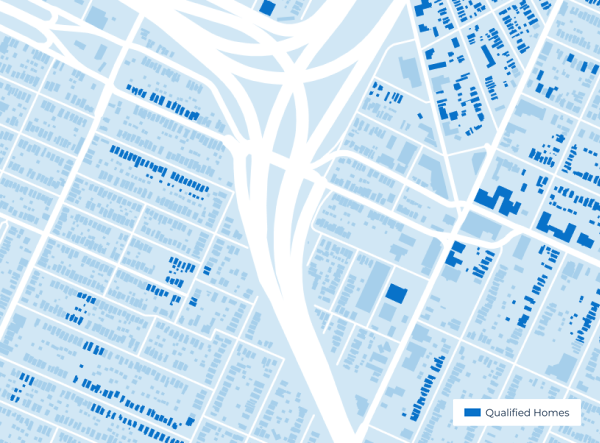
map-bg

Exceed Affordability Goals with AI

60% of low-income households are energy burdened, but fewer than 20% of eligible customers are enrolled in the programs designed to help them. The gap is not funding—it is precision.
Read the White Paper

JOBS TO BE DONE

Affordability outcomes you can own, measure, and defend.

Find the households your current methods miss.

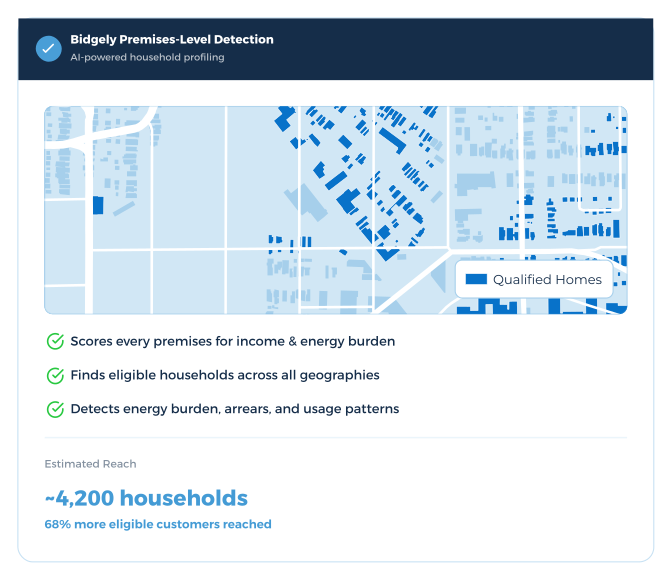
Move beyond ZIP code averages and census-block proxies. Bidgely detects income-qualified customers at the premises level by combining income estimation, energy usage, energy density, arrearage data, and program participation into a single confidence-scored profile.

Match every household to every relevant program.

Customers often qualify for multiple programs but get enrolled in one at a time, often starting with the wrong one. Bidgely sequences interventions by urgency: bill stabilization before weatherization, assistance before efficiency upgrades.

Recruit with touch points that meet the moment.

AI-powered outreach dynamically adapts language, timing, and program recommendations to each household. Multilingual, personalized, and delivered across email, SMS, web, and print.

Prove down-stream program impact beyond enrollment.

Measure pre- and post-program energy savings, billing relief, and arrearage reduction at the premises level. Enrolled customers save an estimated $300–$500 per year. Show regulators exactly who benefited, by how much, and that energy burden moved from above 8% toward the affordable threshold.

USE CASES

What UtilityAI makes possible in affordability.

Every utility has customers who need help but can’t be found with traditional methods. Each use case runs on the same premises-level intelligence layer so your affordability, Demand-Side Management (DSM), and regulatory teams operate from one source of truth.

Find the households that need help most, not just the ones that are easiest to find.

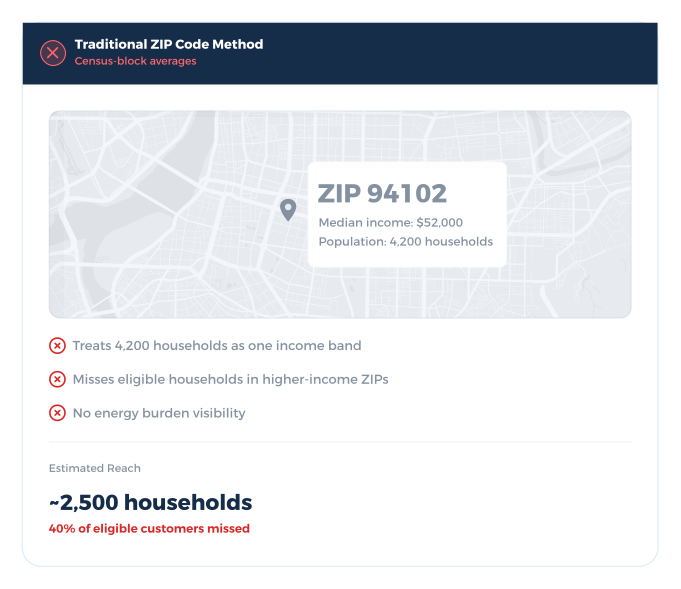
Traditional Low-to-Moderate Income (LMI) targeting relies on ZIP code demographics and census-block data that treats a population of 4,000 as a single income band. Eligible households living outside expected geographies go unidentified. Middle-income households facing real energy burden fail oversimplified income tests. Half of income-qualified customers are unaware programs exist. 88% say they are already doing everything they can to reduce their bills. The result: families stay in crisis, arrears compound, and approved budgets go unspent.
  • Pacific Power identified 8,270 high-propensity income-qualified candidates from AMI data, converting 2.3% on the very first touchpoint, then uncovered an additional 14,000 prospects for its next expansion campaign
  • Avista identified 160,000+ eligible households using premises-level eligibility insights, lifting average program participation from 4% to 6–8%
  • Avista identified 90 rural customers qualified for USDA grants in just 10 minutes, a segment previously thought not to exist in their territory
Pacificorp and Avista's Affordability Journey
affordability-diagram-2a affordability-diagram-2b

Connect the right customer to the right program at the right moment.

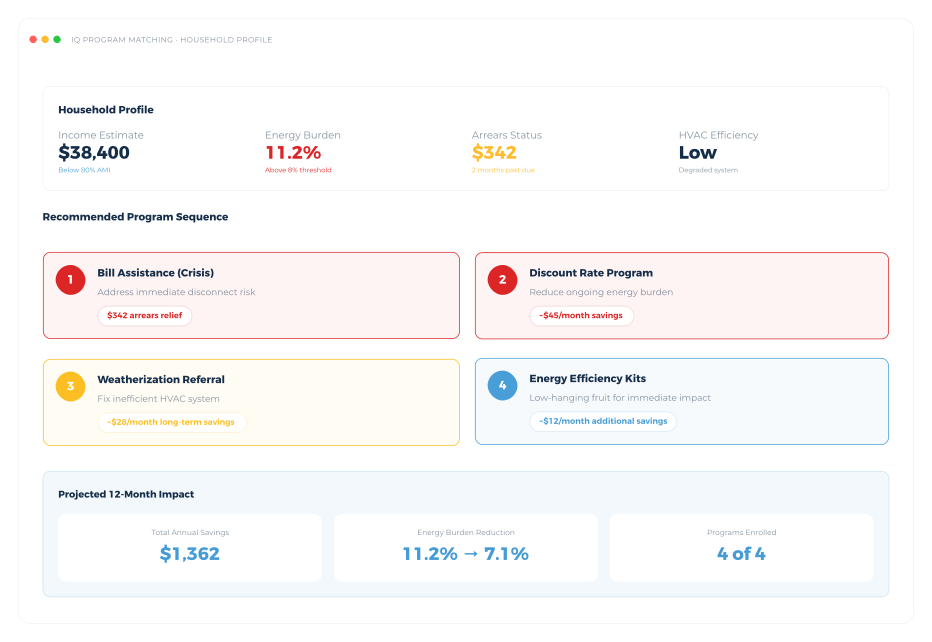
Income-qualified customers often qualify for weatherization, assistance, efficiency rebates, and electrification programs simultaneously, but utilities enroll them in one at a time, often starting with the wrong one. A customer in arrears needs bill stabilization before a weatherization referral. A homeowner with degraded HVAC needs an efficiency upgrade, not a generic discount. When the right programs reach the right household in the right sequence, the impact compounds: arrears forgiven, bills stabilized, efficiency upgraded, energy burden cut in half. Without that sequencing, outreach wastes budget and leaves the highest-need households under-served.
  • Pacific Power: 7% click-through rate on targeted IQ outreach, double the average for their existing customer communications
  • Avista: cut one household’s heating costs from $424 to $163/month by pinpointing insulation gaps remotely, delivering ~$700 in savings over three months
  • Avista: reduced high-bill investigation truck rolls by ~27% through better targeting
  • Alabama Power: LMI customers represent 34% of the customer base, with targeted EE kit distribution and weatherization referrals driven by appliance-level segmentation
  • GenAI-powered recruitment personalizes messaging per household, adapts language dynamically including multilingual support, and eliminates conflicting or redundant program offers
  • Only 42–50% of assistance programs can be pre-qualified using income and household size alone; Bidgely adds energy burden, arrears, appliance profile, and enrollment history to close the gap
Read the White Paper
Program matching and sequencing diagram

AGENTIC AUTOMATION IN AFFORDABILITY

AI agents that find need, sequence programs, and prove impact — without manual analysis.

Bidgely’s agentic layer automates the IQ workflows your team currently does manually, from premises-level detection to program recommendation to equity reporting, without adding headcount.

Modeled value at 1M customers
$13–31M

per year in customer bill savings from incremental IQ enrollment, plus $500K/year in reduced outreach waste from precision targeting.

IQ Detection & Prioritization Agent

Continuously scores every premises for IQ eligibility using income estimation, energy burden, arrearage risk, and program enrollment status. Surfaces the “stacked eligibility” segment: customers eligible for 3+ programs but enrolled in none. Generates prioritized outreach lists ranked by urgency and savings potential.

Program Recommendation Agent

For each identified IQ customer, determines which programs to recommend and in what sequence. Applies a decision hierarchy: arrears management first for accounts at disconnect risk, rate assistance second for high energy burden, weatherization third for inefficient housing stock, and electrification rebates for eligible homeowners.

Equity & Compliance Reporting Agent

Tracks IQ program participation by geography, income band, and demographic segment. Flags enrollment gaps against Justice40 and state equity mandates. Generates regulator-ready reports showing who was reached, who was missed, and what outcomes were delivered.

GENAI IN AFFORDABILITY

Every IQ customer gets the right message, in their language, at the right time.

Bidgely’s GenAI layer powers personalized, multilingual IQ outreach at a scale no human team can match. Every message is grounded in that customer’s actual usage, energy burden, and program eligibility.

IQ Energy Advisor

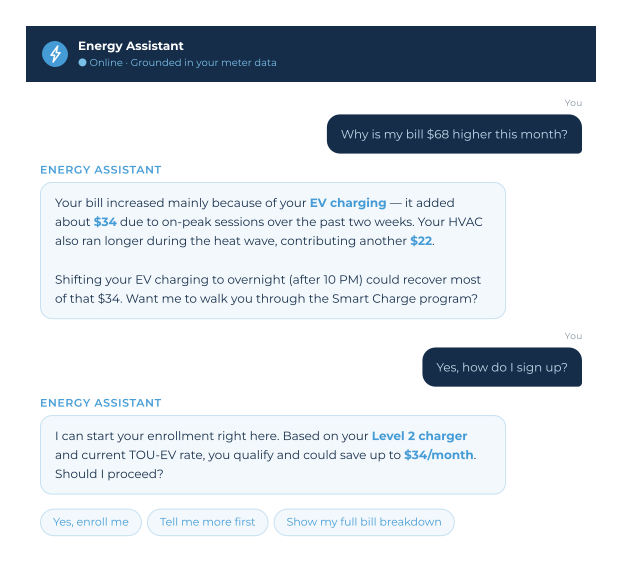
A conversational AI embedded in your portal or app that helps IQ customers understand their energy burden, explore available programs, and check eligibility with clear, plain-language explanations grounded in their actual usage profile.

IQ Recruitment Engine

GenAI-powered Next Best Interactions dynamically adapt language, timing, and program recommendations to each IQ household. Incorporates income probability, energy usage, arrears patterns, and weather to ensure every interaction is timely and relevant.

CSR Affordability Copilot

When a customer calls about a high bill or payment difficulty, the CSR Copilot surfaces their IQ eligibility status, energy burden score, and recommended program stack so the agent can connect them to the right help in one call.

IQ Energy Advisor conversation mockup

PROVEN RESULTS

Real affordability outcomes for utilities and their customers. Measured at the premises.

DEPLOYED WITH

SECONDARY PROOF POINT

160,000+ eligible households identified. Heating costs reduced from $424 to $163/month for one targeted household, saving ~$700 over three months. 90 rural customers qualified for USDA grants in 10 minutes. ~27% reduction in high-bill truck rolls. Low-income customers who previously rated their utility lower on trust and satisfaction are now receiving the personalized support that rebuilds that relationship.

¹ Bidgely analysis of existing utility IQ program pre-qualification workflows.

Resources

  • Partner Webinar

    Digitally Transforming CX: The Road to Greater Utility Impact

    Utilities are under growing pressure to deliver better customer experiences while addressing persistent challenges like high bill shock, call volume, and rising expectations for digital engagement. For partners, this creates an opportunity to bring utilities solutions that make customer interactions more relevant, actionable, and effective. Bidgely’s comprehensive customer experience solution ...
  • Article

    NARUC AI for Natural Gas Utilities Primer

    Natural gas utilities are under pressure to improve safety, reliability, resilience, affordability, and environmental stewardship while managing aging infrastructure, methane leak risk, and growing volumes of customer and system data. This NARUC primer shows how AI and advanced analytics can help utilities and regulators evaluate practical use cases across infrastructure ...
  • Case Study

    OUC Water Customer Snapshot

    OUC demonstrates how utilities can use personalized water engagement to help customers better understand usage, identify opportunities to conserve, and take action before higher consumption became a higher bill. The approach combines water-use insights, peer comparisons, personalized guidance, and digital self-service to create a more connected customer experience. In 2025, ...
  • Case Study

    US Water Utility Customer Snapshot-EU Version

    A major utility demonstrates how personalised water engagement can help customers better understand usage, identify opportunities to conserve, and take action before higher consumption leads to a higher bill. The approach combines water-use insights, peer comparisons, personalised guidance, and digital self-service to create a more connected customer experience. In 2025, ...
  • Industry Analysis

    SECCs Exploring Energy Affordability

    Energy affordability now affects a broad range of utility customers. In SECC's nationally representative survey of 4,021 U.S. household energy decision-makers, 51% said their electricity bill had increased over the prior year, and nearly one-third said they had struggled to pay it at some point. The research shows that customers ...
  • Case Study

    How European Energy Retailers Are Winning the Battle Against Churn

    Annual churn has reached 24% in some European markets, and replacing a single lost customer costs an estimated €150 to €200. That makes retention a direct margin concern. The question is whether retailers can identify risk early enough to act before a customer leaves. Bidgely analysed data from 2020 through ...
  • Podcast

    Scaling AI in Utilities: From High Bill Insights to Enterprise-Wide Transformation

    A better customer experience was just the beginning. In this episode, Arizona Public Service's (APS) Venkat Nimala and Bidgely's Kartik Murthy explore how an AI solution designed to explain high energy bills evolved into a broader strategy for utility-wide innovation. What started as a customer service initiative has become the ...
  • Case Study

    NW Natural Gas Customer Snapshot: NW Natural Delivers 197K+ Verified Therm Savings with AI-Powered Gas Intelligence

    NW Natural needed a way to deliver measurable energy savings and customer bill relief while maximizing program resources. Using existing monthly gas billing data and Bidgely’s UtilityAI™-powered Home Energy Reports, the utility identified heating usage patterns and uncovered where customers had the greatest savings potential. By separating heating usage from ...
  • Solution Brief

    Bidgely Water Solution Brief

    Bidgely helps water utilities turn AMI data into behind-the-meter water intelligence that improves customer experience, reduces service costs, reduces water loss, and supports conservation goals. Using AI-powered disaggregation, UtilityAI™ for Water identifies water use by category, including irrigation, showers and baths, toilets and flushes, washing appliances, pools, and always-on leakage, ...
  • Case Study

    A Southeast U.S. IOU Modernizes CX and DSM Programs With Bidgely

    A Southeast U.S. IOU modernized its CX and DSM programs with Bidgely in phases: digital CX widgets first to validate customer response, then full HER migration, and now extending the same personalized, appliance-level insights into TOU promotion and coaching on a single platform. Delivered year-one savings. Achieved 124% of the ...