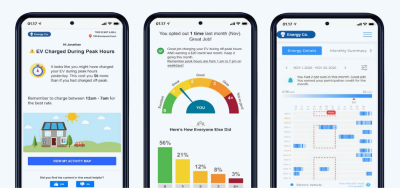
Deliver your Behavior EE savings while uplifting your CSAT.
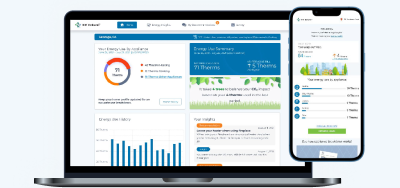
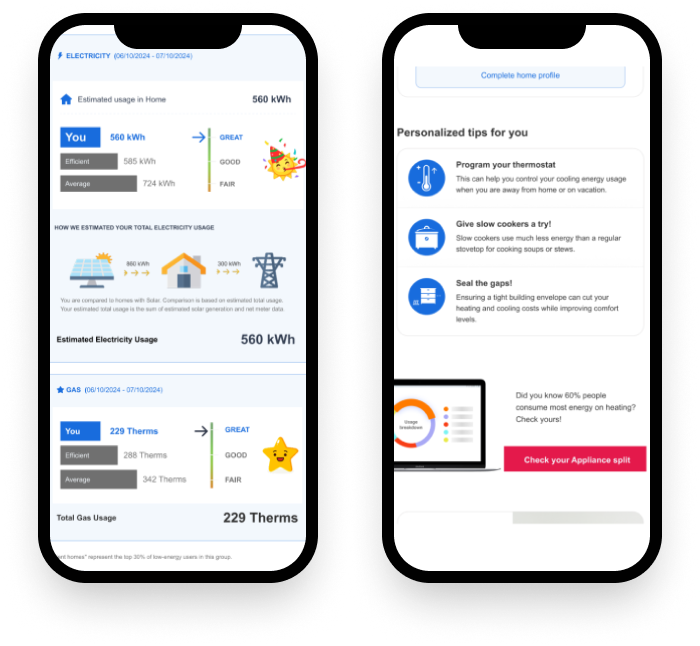
Appliance-level personalization raises engagement where generic neighbor comparisons go flat.
MAXIMIZE DSM PERFORMANCE
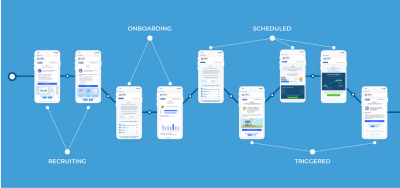
JOBS TO BE DONE
Appliance-level personalization raises engagement where generic neighbor comparisons go flat.
Precision targeting means fewer wasted incentives and higher-performing enrollees.
Bidgely narrows a large population down to the customers with the right appliances and the highest propensity to act.
Savings attributed at the appliance level, not modeled estimates. Measurable. Defensible.
USE CASES
Each use case uses the same appliance-level intelligence layer, so your energy efficiency, demand response, and program marketing teams operate from the same source of truth.
Personalized savings engagement, built to scale.
Find the customers who can shift load before you spend a dollar on outreach.
Put every EE rebate in front of the customer most likely to convert.
AGENTIC AUTOMATION IN DSM
Bidgely’s agentic layer runs the DSM workflows your team currently does manually, from program health monitoring to targeting list generation to mid-cycle course correction, without adding headcount.
In avoided DSM marketing waste. $4–6M/year in modeled value per utility across DR cost reduction, enrollment lift, and analyst time savings.
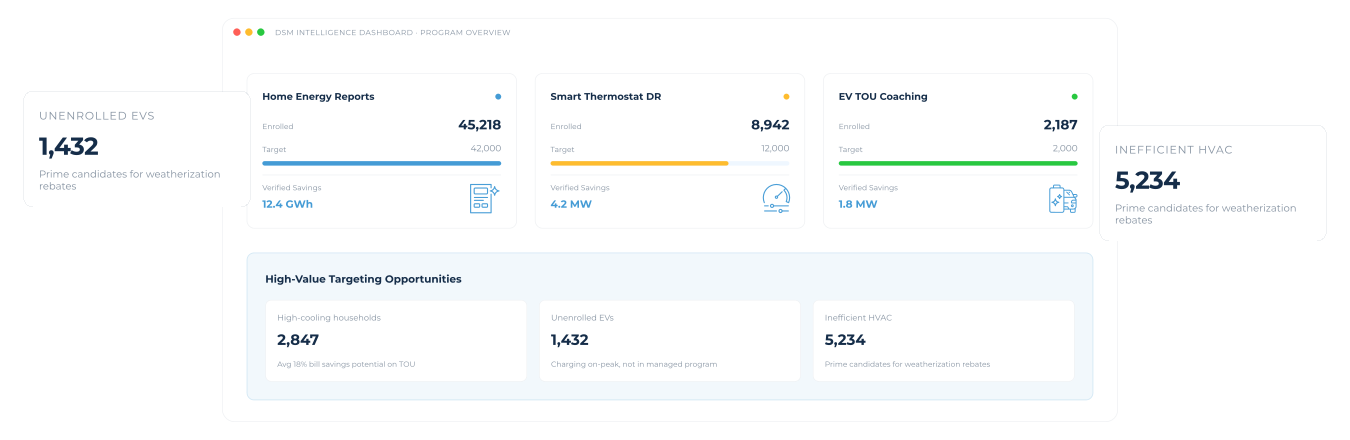
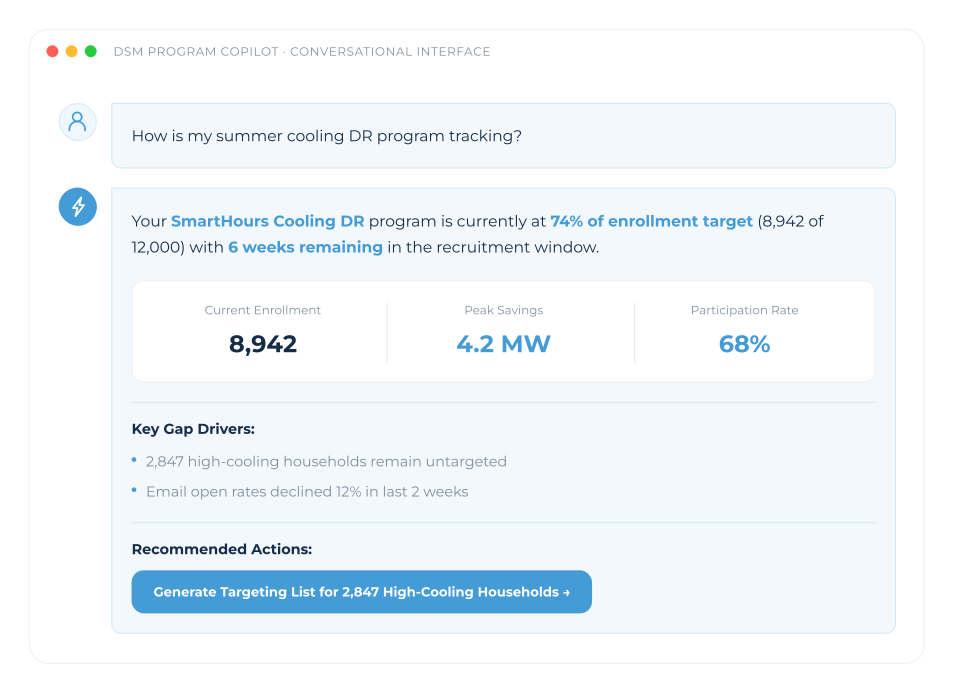
Monitors every program in your portfolio — DR, EE, TOU, managed charging — against enrollment and savings targets in real time. Flags underperformance mid-cycle before monthly reviews, identifies the root cause, and generates ready-to-act targeting lists for course correction.
Runs personalized HER campaigns across paper, email, and digital channels continuously. Selects the next-best interaction for each customer from a library of behavioral tips, program promotions, and rate coaching, adapting to each household’s appliance profile, DER status, and savings potential.
Continuously scores every premise for EE, DR, TOU, and electrification program fit based on live appliance profiles, efficiency ratings, and behavioral signals. Delivers fresh candidate lists to your DSM and marketing teams without manual data pulls or analyst bottlenecks.
GENAI IN DSM PERFORMANCE
Bidgely’s GenAI layer gives your DSM, program management, and customer operations teams a conversational interface to the data that drives every targeting decision and savings measurement.
A GenAI assistant for program managers. Ask plain-language questions about program health, enrollment gaps, and savings trajectory. Example: “How is my summer cooling DR program tracking?” → enrollment vs. target, participation rate, kWh savings vs. target, and key gap drivers.
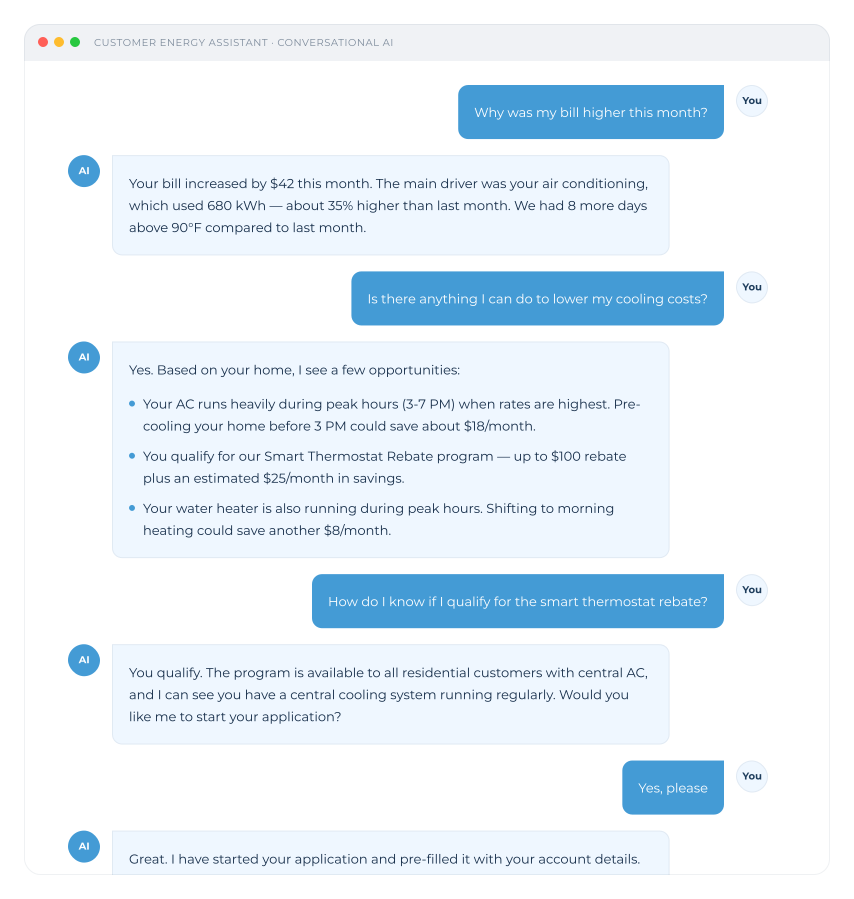
A conversational AI embedded in your portal or app that helps customers understand their usage, find savings opportunities, and explore program eligibility — with answers grounded in their actual appliance profile, not generic FAQs.
Automatically generated plain-language explanations of why a specific customer qualifies for a rebate, program, or rate plan — embedded in outreach to improve conversion and reduce call center inquiries.
PROVEN RESULTS
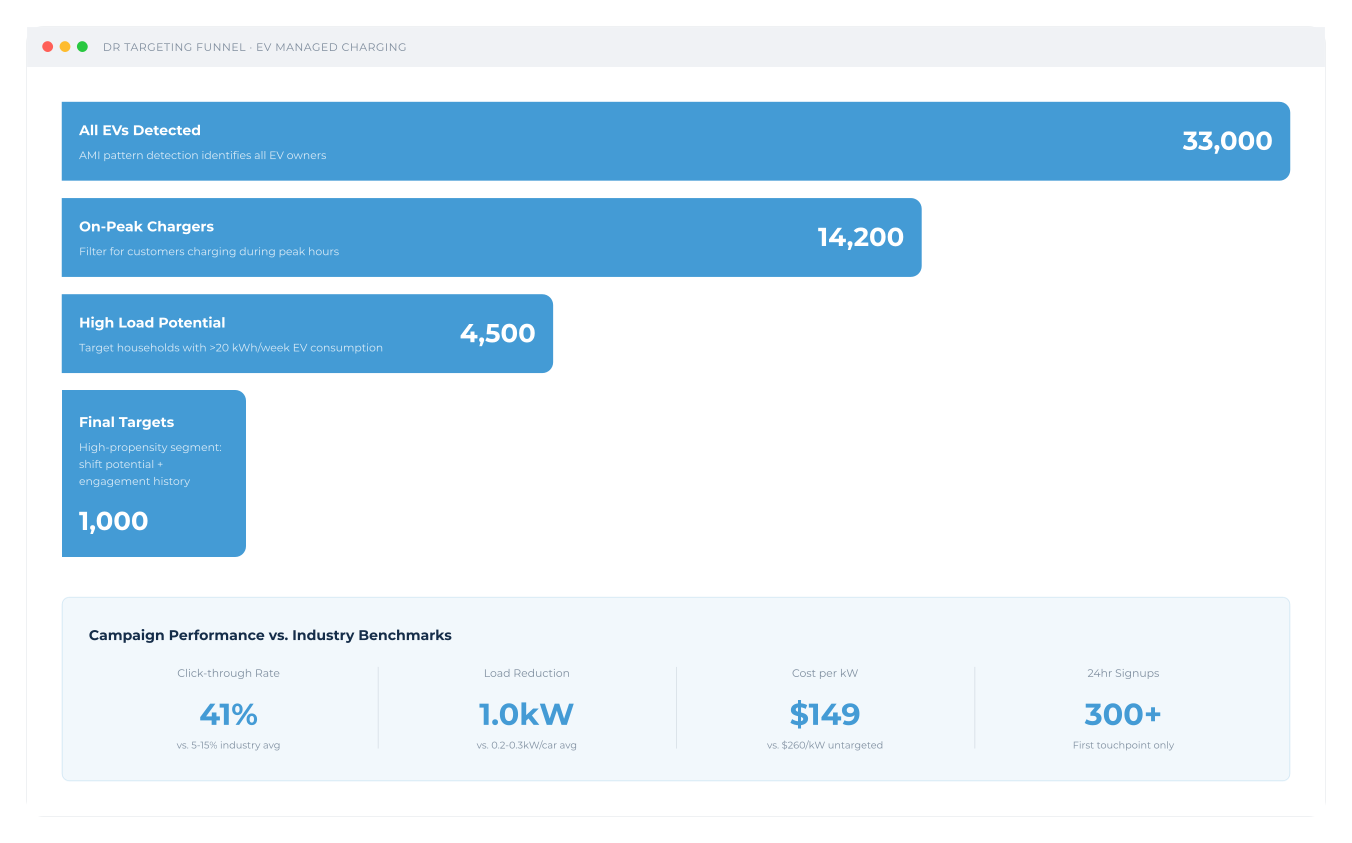
Compressed 33,000 EV candidates to 1,000 high-value targets using appliance-level intelligence. Achieved 41% click-through rate (vs. 5–15% industry norm), recruited 300+ customers in the first 24 hours, and delivered 1 kW/car load reduction — 3–5x the industry benchmark.
Read Case Study20M personalized emails, 59% open rate, 81% customer satisfaction, 70% reduction in on-peak EV charging. J.D. Power #1 ranking.


238% of contracted savings in program year one, 97% realization rate.

Highest CSAT scores Cadmus has evaluated among behavioral programs. 200% of forecast savings in Oregon.
Footnotes — Industry benchmarks (not Bidgely data): ¹ Industry estimate cited in Bidgely DR Webinar materials. ² Industry benchmark for per-vehicle load reduction (0.2–0.3 kW/car), used as comparison to Bidgely/NV Energy result of 1 kW/car. ³ Industry norm for email CTR (5–15%), used as comparison to Bidgely/NV Energy result of 41%.
Resources

Utilities can improve DSM cost-effectiveness by finding the right customers before incentive dollars are committed. Bidgely identifies who can save, which appliance can shift, and who will enroll, at every address.
Home Energy Reports and demand-response targeting and recruitment narrow broad populations into higher-fit EE and DR candidates. Precision targeting means fewer wasted incentives and higher-performing enrollees.
Targeted DR recruitment has cut cost per kW by 43%, from $260 to $149. Rocky Mountain Power saved 41 GWh and reduced program cost 25% against its legacy HER program.
Utilities can improve behavioral energy efficiency results by replacing generic neighbor comparisons with appliance-level personalization. Legacy HERs flatten over time because they rely on neighbor comparisons and treat different households identically.
Each Bidgely Home Energy Report is built on that household's own savings opportunities and gives the customer a specific next step.
Bidgely HER deployments have produced more than 2 TWh in cumulative savings. Pacific Power reached 200% of forecast savings in Oregon and 136% in Washington. SoCalGas saved 565,000 therms in year one.
Utilities can identify customers who can shift load by reading cooling capacity, EV charger amplitude, charging windows, and pool pump type directly from meter data. No surveys. No proxies.
Bidgely's demand-response targeting and recruitment capabilities build the recruitment list from confirmed shiftable load, so the list behaves the way the program model assumes.
NV Energy narrowed 33,000 EV candidates to 1,000 high-value targets, hit a 41% click-through rate, recruited more than 300 customers in the first 24 hours, and delivered 1 kW per car of load reduction against an industry benchmark of 0.2 to 0.3 kW. PSEG Long Island cut on-peak EV charging 70% through targeted TOU coaching.
Utilities can identify customers most likely to enroll by scoring households on appliance-level fit rather than billing data and demographics. Traditional targeting cannot distinguish a degraded HVAC system from a home that simply runs hot, so the highest-potential savers go untouched.
Bidgely's energy-efficiency targeting and recruitment capabilities score every premise for program fit and put each offer in front of the households that match it.
Appliance-level targeting has reduced marketing cost per enrollment by 15% and improved weatherization program participation 2.5x. NW Natural delivered 238% of contracted savings in program year one with a 97% realization rate. CVA reached 112% of its savings goal.
Bidgely's DSM targeting works from appliance-level intelligence rather than demographic, billing-based, or neighbor-comparison signals. Demographic and billing data can narrow a population, but neither shows which appliance is creating the savings opportunity, which load can shift, or which household is likely to respond.
Neighbor comparisons have the same limit in the other direction. They tell a customer how they rank without telling them what to do about it.
DSM teams using Bidgely can see an inefficient water heater, a single-speed pool pump, or high-saturation heating, and target the offer to the home that has it. Customers get guidance tied to their own equipment rather than a peer average.
Utilities can prove DSM cost-effectiveness to regulators and executives with savings attributed at the appliance level rather than modeled estimates. A utility can show which households were targeted, what opportunity existed in each one, and how usage changed.
PNM recorded 9.2 GWh in evaluated savings and reached 127% of its filed goal after redesigning its program. Pacific Power earned the highest CSAT scores Cadmus has evaluated among behavioral programs.
Program performance is monitored against enrollment and savings targets during the cycle, surfacing underperformance for course correction before it reaches a monthly review.
Utilities can prove DSM cost-effectiveness to regulators and executives with savings attributed at the appliance level rather than modeled estimates. A utility can show which households were targeted, what opportunity existed in each one, and how usage changed.
PNM recorded 9.2 GWh in evaluated savings and reached 127% of its filed goal after redesigning its program. Pacific Power earned the highest CSAT scores Cadmus has evaluated among behavioral programs.
Program performance is monitored against enrollment and savings targets during the cycle, surfacing underperformance for course correction before it reaches a monthly review.
Utilities have used Bidgely's DSM solutions to exceed filed and forecast savings targets, recruit customers who can shift load, and reduce program and recruitment costs. NW Natural reached 238% of contracted savings in its first program year with a 97% realization rate, and PNM hit 127% of its filed goal after redesigning its program.
NV Energy compressed 33,000 EV candidates down to 1,000 high-value targets and delivered 1 kW per car of load reduction, against an industry benchmark of 0.2 to 0.3 kW. Targeted DR recruitment has cut cost per kW to $149, down from a $260 baseline.
More detail is available in the AI-Powered HERs for Energy Efficiency asset and the Keeping the Lights On: A Demand Response Roadmap for 2026 and Beyond