
According to the latest December 2021 reports, more than 200,000 drivers have reserved a Ford F-150 Lightning for 2022 delivery. To fulfill the massive demand, Ford has already doubled its production capacity for electric pickup trucks twice. Though some buyers will have to wait until 2023 to receive their vehicles, starting this spring, F-150 Lightnings will begin hitting the road and – more importantly for energy providers – plugging in to charge up at home.
Not far behind, Rivian customers have been told that their cars will start arriving in March, although the majority of the first wave of deliveries are expected in the summer and autumn of 2022. And Chevrolet just unveiled its 2024 Silverado EV in January, which will start rolling off the factory line in 2023. In the first month following Chevrolet’s announcement, more than 110,000 Silverado EVs were reserved.
Not only do these pickups promise ranges of 300-400 miles, Ford and Chevrolet are making bi-directional, vehicle-to-grid power a major part of an “energy independence” marketing message, touting the vehicles’ ability to provide back-up power for the home.
Driver excitement for electric pickups is high and gaining momentum with new market segments and in new parts of the country, signaling the start of a dramatic new era in transportation electrification for energy providers with massive increases in load and an acceleration of the deployment of residential solar+storage.
It’s been a common energy industry analogy to compare the electric load of a single electric vehicle as equivalent to adding a new home to the grid. With the promised 300-400 mile range for the Lightning, Silverado EV and Rivian, each pickup will be equivalent to three new homes coming online.
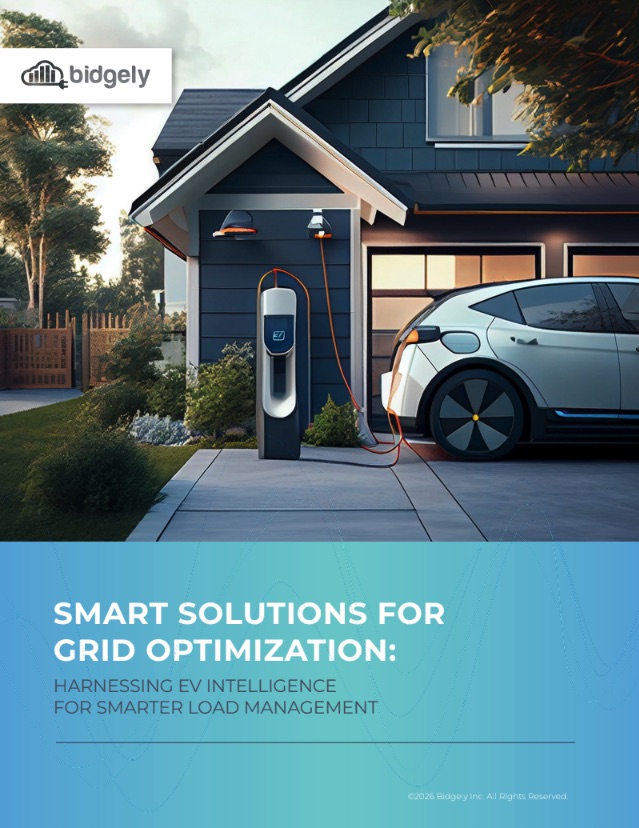
Ford is offering several levels of home charging options, including a 32-amp mobile-charging unit that will run on either 120- or 240-volt household AC, a 48-amp wall mount charge station and a bi-directional 80-amp option. The Lightning’s bi-directional charging capabilities are also able to replenish other EVs at Level 2 speeds.
Even at the earliest stages of the EV adoption curve, energy providers realized that an uptick in EV ownership translated into not just increased load, but concentrated load on the grid – both in terms of geo-location and time of use.
Geographically, EV adoption does not advance at a uniform pace across a service territory. Some regions and communities embrace EVs more quickly than others. And as the types of electric vehicles continue to diversify, individual locations will reveal different adoption curves by vehicle class. For example, communities with high electric pickup adoption rates will have greater concentrated load than those with high compact electric car adoption.
With time of use, without any intervention, charging behaviors have also been shown to yield concentrated load in the form of two time-related peaks: one in the early evening when drivers return home, and a second at midnight when EVs are often pre-programmed to start charging.
The increased battery capacity of electric pickup trucks will only exacerbate these grid load concentrations.
As energy efficiency programs have demonstrated for many years, behavior management programs can serve as a powerful load balancing mechanism in conditions like these. The key to maximizing its effectiveness is proactive and personalized customer engagement.
That’s where Bidgely can help. More accurate than motor vehicle registration records and more complete than telematics, Bidgely’s Analytics Workbench provides granular EV analytics for every EV owner in a service territory to enable utilities to engage with drivers as a trusted advisor and help manage EV charging with recommendations and regular summaries of each customer’s charging activity and cost of ownership. This highly targeted, relevant and data-insight-based approach yields greater behavioral management program participation and outcomes.
Bidgely’s detection insights also serve as powerful inputs for both real time grid operations and infrastructure planning. Utilities are able to see the total charging consumption and EV load by region, zip code, substation or feeder; the percentage of level 1 vs. level 2 chargers; EV load forecasts; percentage of on vs. off-peak charging; specific geographies with the highest charging; and more. Analytics Workbench visualizes EV loads over time to identify high growth EV pockets and determine where constraints may exist or develop.
The auto industry is moving quickly to broaden their role to include energy advisory and installation services, and utilities need to act now and leverage their uniquely powerful energy insights to avoid being displaced and to solidify the driver-utility collaboration necessary to ensure grid stability.
As one of the first electric vehicles to take advantage of bi-directional charging in North America, Ford is marketing the F-150 Lightning not only as a high performance pickup truck, but also as a home energy storage solution.
For drivers who choose the bi-directional 80-amp charging option, the installation of a “home integration station” (comprised of a power inverter, dark start battery, and transfer switch to enable the bi-directional flow of power in the home) enables the vehicle to provide 9.6 kW of backup power that Ford says alleviates the need for gas generators, Powerwalls or any other legacy backup power solution. The truck’s battery capacity is sufficient to power an average 30 kWh/day home for approximately three days, or to deliver partial power to critical systems or solar homes for up to 10 days. In the future, Ford says the same backup power feature will also be put to use to allow home power to come from the vehicle during peak hours, and initiate charging when energy is less expensive.
As an additional energy independence play, Ford has partnered with residential solar giant Sunrun as its preferred charging equipment installer as well as to offer customers residential rooftop solar packages. Customers interested in combining charging equipment installation with solar power may be eligible to do so for zero dollars down, and will receive reduced installation pricing.
Following Ford’s lead, Chevy is marketing that the Silverado EV will provide 10.2 kilowatts of home back-up power capacity. Specific solar integrations have not yet been announced.
Successfully integrating renewable energy and EV and other battery storage requires an AI-powered strategic approach. As with EVs, Analytics Workbench provides the data-driven foundation that utilities need to manage increases in DER adoption, particularly as electric vehicles take on the role of home energy storage.
With essential energy data inputs ranging from home-by-home daily solar production patterns to aggregate solar production at the substation level, Bidgely empowers energy providers to better forecast the flow of renewable energy onto the grid at the line level to ensure grid stability is maintained. Bidgely’s analytics can also inform peak load planning and necessary capital upgrades by accurately predicting the impact of solar down to the feeder or transformer level.
The introduction of the electric pickup truck segment is the next major tipping point in the transportation electrification transition, and utilities need to be prepared for the impact. Managing the triple-impact of greater loads, bi-directional energy flow and increased solar adoption requires a data-driven approach that enables more sophisticated load management and planning and customer engagement.
To learn more about Bidgely’s EV Solution, download the solution brief.
Given how much revenue is at stake, and the importance of managing growing EV load to ensure continued grid reliability, it has become a business imperative for energy providers to drive the electric vehicle buyer’s journey, rather than sit back and wait for consumers or other stakeholders to take the wheel.
As trusted electricity advisors and the providers of the fuel that will drive the future, energy providers are uniquely positioned to remove purchase barriers while also empowering car and truck buyers with information, tools and mutually beneficial initiatives to optimize EV ownership. In doing so, they can facilitate every step of the buying process.
[Download the EV buyers journey infographic.]
In J.D. Power’s 2021 Electric Vehicle Consideration Study, one-third of vehicle shoppers reported that “lack of information” about electric vehicles was the primary reason they wouldn’t consider purchasing one.
That finding emphasizes how important it is for energy providers to close this education gap and help consumers understand EV’s as a viable and appealing alternative to gas-powered vehicles.
Austin Energy embraces their role as EV educators, advancing adoption in Central Texas with creative awareness campaigns for more than a decade.
“Our EV marketing campaigns have been based on the notion that we aren’t selling a product, we’re selling an idea,” explains Karl Popham, Austin Energy’s Manager of Electric Vehicles & Emerging Technologies. “We looked at the traditional approach. The marketing team brought in some samples, and asked me which one I liked. And I said, ‘none of them.’ They had a lot of fine print and a very transactional design – almost like an energy efficiency light bulb rebate. I knew that wasn’t what we needed. We needed clean, non-utility-looking marketing that engaged our community in a movement.”
Austin Energy’s EV program continues to break new ground in utility marketing, including their addition of a campaign mascot to the team: StEVie the EV Loving T-Rex.
“We really were searching for an opportunity to break the ice with people, and StEVie has a great way of demystifying the technology and helping EVs become approachable,” adds Austin Energy’s Senior EV Equity Program Lead Amy Atchley. “StEVie helps bring the narrative forward and facilitate the conversation around EV affordability, accessibility, fewer moving parts and other vehicle advantages. It’s all about helping open the doors for people to get into EVs.”
Energy providers’ education role also includes correcting misinformation and overcoming hesitation around such things as range anxiety, barriers to home charging, concerns about battery life, questions about whether electric cars are cheaper than gas, confusion about how to get an EV serviced and more.
Smart meter data enables energy providers to scale awareness programs with an emphasis on those consumers with the highest propensity to buy at any given point on the EV adoption curve. Bidgely’s EV Solution applies patented disaggregation and machine learning technology to residence metadata, appliance-level energy use, lifestyle, neighborhood trends, tax credit availability and more to enable energy providers to target personalized EV education to the highest propensity buyers to optimize marketing and engagement success and ROI.
Today, car buyers frequently move from the Awareness to the Desire-to-Own step of the electric vehicle buying journey because they are influenced by advertising, social media, friends and family, or community trends. It’s time for energy providers to get in the mix. As trusted advisors, there are no entities or experts better positioned to serve as EV influencers.
Bidgely’s EV Solution enables energy providers to leverage smart meter data insights to personalize every touchpoint with a prospective EV buyer based on their unique energy use profile. Different drivers are motivated by different things, and getting them excited about electric vehicles requires targeted appeals that tap into each person’s individual motivations. Bidgely calls these communications “personalized nudges” that are designed to pique customers’ interests with the EV benefits that will resonate most on a regular cadence that encourages their purchase and nurtures them throughout their auto buying journey.
Studies have shown that electric vehicle buyers conduct wider and deeper research than other auto buyers to determine which EVs are right for them. Today, most drivers rely upon organic search, social media and word of mouth to evaluate brands and technologies. Looking forward, energy providers need to establish themselves as the leading and most trusted resource when it comes to EV research.
As a means to continue to deepen and expand on personalized customer touchpoints initiated during the Awareness and Desire-to-Own steps, Bidgely’s EV Solution equips energy providers with a wide range of consumer research calls-to-action, ranging from low-lift suggestions such as “check out this article to learn which EV is best for you” to higher-lift diligence opportunities such as “use a purchase calculator to evaluate your buying options.” The goal is to synthesize vehicle pricing, available incentives, charging equipment costs and more to help buyers make sense of EV budget inputs and feel confident in their purchase decision. When informed by smart meter analytics, traditional one-size-fits-all buyer’s guides are transformed into more personal, relevant and action-oriented research tools.
“If a customer is trying to learn more about an EV, we wanted to create a space for them to go to find all the information they need. ‘What does electric fuel look like?’ ‘How easy is it to charge in my neighborhood? Or my city?’ ‘How far can I go?’” says Austin Energy EV Program Specialist Bobby Godsey. “Our vision for our EV buyer’s guide is to improve the customer experience from start to finish. We want to educate them about what car they want to buy and what vehicle would work best for them based on how many miles they drive, how many seats they need, their budget and more. They can pick the color that they want, whether they want leather seats, or two or four doors. Once they narrow it down to the car they like, our buyer’s guide actually shows them live car inventory that is available in Austin. It’s updated three times a day. So now they can narrow down their EV options to the car they want, find that EV on a lot and see the price, and then go to that lot and test drive it.”
The J.D. Power Electric Vehicle Consideration Study found that if consumers have taken a ride in an EV, they’re three times as likely to consider buying one versus someone who hasn’t interacted with an EV. Energy providers can tap into that persuasion reality by facilitating dealership test drives and hosting driving experience opportunities.
“The auto dealership industry has always been a hurdle, and we’ve been looking at it for years now,” says Godsey. “When our team went out to engage in conversations with the dealerships, we heard some pushback from sales teams who said EVs are hard to sell. We have to recognize that at the end of the day, a salesperson is trying to earn money, and the easiest way to make money is to sell what they know. Right now, the cars they know are gas vehicles.”
With that in mind, Godsey said the Austin Energy team tried to conduct EV classes with dealership sales teams, but sales personnel turnover was high, and they would lose the educational investment with each subsequent round of new hires. So now the utility has diversified its education efforts to include both consumer empowerment and in-dealership resources.
“What I love about our buyer’s guide is that it equips our customers to go to the dealership knowing exactly what they’re looking for and that their specific vehicle is waiting on the lot for them to test drive. And at the same time, from the dealerships perspective, the salesperson sees an Austin Energy customer come in already informed by their buyer’s guide research, which makes the sales process that much easier,” says Godsey.
“One of the things that we offer to dealerships in our region are Chargeway kiosks. They’re a great tool that, in my opinion, really explains electric fuel in a way that makes sense to everybody,” he adds. “The salesperson can use the kiosk as a tool to confidently explain to you what electric fuel looks like and where to charge. You can even take a look at a road trip on the kiosk. Maybe you live in Austin and you want to take a road trip to Nashville or to New York or to LA. The kiosk will show you all the charging stations available to you on that route, which helps to overcome range anxiety.”
To streamline dealership partnership efforts, Bidgely’s Analytics Workbench provides granular EV analytics for every EV owner in a service territory to enable energy providers to see total charging consumption and EV load by region, zip code, substation or feeder. EV ownership often grows in pockets, meaning that dealerships in those high-growth regions are best-situated for utility-dealership collaborations.

The energy provider’s role in the buyer’s journey doesn’t end with the vehicle purchase. New drivers are eager to receive information about how to get the most out of their car after they drive it off the lot.
Bidgely’s AI-powered EV detection at the household level makes it possible for energy providers to identify new EVs in their territory and proactively welcome and engage with new drivers, setting them up from the start to manage their EV charging and optimize their ownership experience.
Some energy providers engage electricians and maintain a list of qualified Electric Vehicle Supply Equipment (EVSE) charging installers for their customers. Selling EV chargers and offering charger installation and maintenance services promises to generate significant new and diversified utility revenue. For example, energy providers who use Analytics Workbench to detect homes with L1 chargers can develop a targeted campaign to transition those customers to L2 chargers, including product and service promotions.
Other energy providers run EV drivers clubs in which EV owners can interact as part of a community with both the utility and other drivers. Encouraging EV owners to share their experiences with each other and evangelize EV ownership with other potential EV buyers plays a significant role in building EV adoption momentum. The JD Power study found 46 percent of those who own an electric vehicle are “very likely” to consider another one, making the energy provider’s investment in improving the EV ownership experience and promoting EV communities a solid growth strategy.
“One of the things that we wanted to test was how many EV sales we could help influence. We had a challenge to reach 5000 through the Bloomberg American Cities Climate Challenge,” said Atchley. “In under two years we surpassed that goal, and we’re now building on that success and continuing to grow our EV programs to move the community along. It’s about changing behaviors. It’s about shifting mindsets. It’s about getting people thinking about alternative modes of mobility and how we can address greenhouse gas emissions. We support the city of Austin’s goal to achieve net zero by 2040. And we’ve got to do it with transportation. That is what is fueling the work that we’re doing here in Austin to drive change with electric vehicles.”
To hear more from the Austin Energy team about their industry leading electric vehicle program, check out their 2021 Engage session Electric>Gas: How Austin Energy Is Building EV Champions on demand. Learn more about how Bidgely’s EV Solution can empower energy providers to drive the EV buying journey.
Ai is still evolving and may not be perfect. Always verify important details for accuracy.